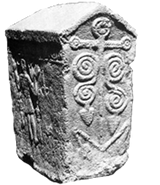
Bosnia is a name for a model of community life shared by the inheritors of different holy traditions. Its history bears witness to efforts to formalize this model in contemporary modes of thought. In an earlier period––the time of the Bosnian Bans and Kings––this model expressed itself in the effort to justify and establish communal life between different Christian communities. […]
The signing of the Dayton Accords should have provided the majority of the inhabitants of Bosnia and Herzegovina with the hoped-for return of prewar values. The Dayton Accords ended the bloody war in Bosnia and Herzegovina: this was without a doubt its only contribution. But those same people who started the war and conducted it were also the Dayton Accords […]
Book reviews on the occasion of the 30th anniversary of the Dayton Peace Agreement should carry significant symbolic and social value, as they open space for a critical reassessment of the legacy of a peace that simultaneously ended the war and institutionalized deep ethnic, political, and social divisions. This anniversary prompts reflection on how Dayton, in its thirty years, has […]
At the Bosniak Institute in Sarajevo on July 8, 2010, BZK “Preporod” (“Renaissance”) organized a lecture on remembering the Srebrenica genocide 1995-2010. The speakers that evening were the president of BZK “Preporod” Senadin Lavić and professors Edina Bećirević, Ćazim Sadiković, Šaćir Filandra, Asim Mujkić and Dino Abazović. Fifteen years have passed since July 1995 in Srebrenica. Many questions have still […]
She sheds a tear when no one is watching She feels the pain bottled in her chest She hopes the end is near She sheds a tear when no one is watching Her father, uncle, and cousins have not yet been found. Under her breath she speaks to a father she does not remember, To an uncle who would have […]
If they had told me before how many times a man can die, I might have found a horse in order to flee. First, we all died; they took our fathers they took our honor and dignity they took our sanity, and they made us into fools because we believed. I died when I buried my first And then, I […]
Over the course of a mid-Summer week in July 1995, more than 8,000 men and boys were systematically killed in a small Bosnian town called Srebrenica. Untold Killing tells the little-known story of genocide and ethnic cleansing right in the heart of Europe through the voices of those who survived it. It’s a tale of betrayal, injustice, and what the […]
The main purpose of this book is to highlight the importance of the rich encounters, transfers and exchanges between the peoples of Central Europe and the Muslims of Bosnia and Herzegovina for the development and transformations of modern Bosnian Muslim identity and its representations from the nineteenth century until the present. It also provides evidence of how the history of […]
THE SIEGE of Sarajevo was the longest in modern European memory. For one thousand days, beginning on April 5, 1992, Yugoslav-backed Serbian separatists surrounded the young capital of Bosnia-Herzegovina and shelled and shot its residents. Confronting a determined armed resistance and a stoic population, the besieging force never attempted to take the city, and after the Dayton Agreement ended the […]
My native country is Bosnia and Herzegovina. I did not want to leave my land. In 1992, Serbs carried out their genocidal action called “ethnic cleaning” in Bosnia and Herzegovina. Many Muslims had to leave, or they would be destroyed and executed. I immigrated with my family to Germany. Although it was an unknown culture for me, I was happy […]
Bosnian-Herzegovinian literature has been translated to Czech more than to any other language. However, the poetry translations are so rare that each constitutes a special cultural moment. From 1911 – when the first Czech translation of selected poems was published – until today, an entire century has passed with a mere nine poetry translations. This edition of Milorad Pejić’s poems, […]
The end of war does not mean peace. It is simply the end of war, the end of death and destruction. Every story of war includes a chapter that almost always goes untold—the story of the aftermath, which day by day becomes the prologue of the future. —Photographer Sara Terry Online Exhibit, Dayton International Peace Museum “The Dayton Peace […]
Republika Srpska is the spoils of war that Serbia will not give up easily. The survival of Republika Srpska is the priority in the security strategy of Serbia. Without solving the Bosnian issue, the stability of the Balkans will remain questionable, says Sonja Biserko. The 25th anniversary of the Dayton Accords is a reason for one more look at the […]
Bosnia-Hercegovina has always been coveted. Its first known settlers were Illyrians. We know them only from the ancient Greeks, who traded with them for gold, copper and tin, and from the Romans, who conquered them as part of their empire, starting before 100 BCE. The Roman Empire, too large to govern, was divided into Eastern and Western halves in 286 […]
Šušnica: Moscow and Belgrade will try in every way to transfer the issue of the organization of Bosnia and Herzegovina from the framework and mechanisms of the Dayton Agreement and the Constitution of Bosnia and Herzegovina to the framework of the Security Council, where Russia possesses veto power. That will become possible through the change in the reality of the […]
These were the stirring words of Kemal Kurspahić, the first editor of Oslobodjenje elected by his fellow journalists. Oslobodjenje (the word for “Liberation”) was founded in 1943 as Sarajevo’s anti-Fascist newspaper during World War II. And Mr. Kurspahić’s staff did exactly what he urged — never missing a day after May 14, 1992, when their security guards fled as the […]
Arebica is a name for Arabic script adjusted to the vocal system of Bosnian and other Slavic languages, usually closely tied to Bosnian Aljamiado literature. It started to develop from the very beginning of arrival of the Ottomans in Bosnia and represents the aspiration of Bosnian people to write and to read in their native language. This language was called […]
and the wind is driving a flock of tiny clouds, like sheep. Still, I’m not sure it will rain. You can’t rely on the sky, so I’m watering the tomatoes with extreme effort. They are starting to ripen, and I know I won’t be here to see them. I’m leaving, but I can almost feel the sweetness in the mouth […]
It is difficult to understand the executioners of the genocide in Srebrenica. What were they doing? Why were they doing it? What were they thinking? How could they have done what they did? In Srebrenica MCMXCV [2017], Emir Suljagić recounts a testimony from an executioner told to the International Criminal Tribunal for the former Yugoslavia after a massacre near Srebrenica […]
you don’t know what you’ll step on in a dark alley, behind the school, where someone was leaving someone, where a small betrayal announced big defeats. If you take a wrong step, you’ll be blinded by a flash of memory, your ulcer bursts, your brain hemorrhages. You wonder innocently; for new illnesses you can’t see old wounds. Translated by […]